
Exercise Execution
Lateral Raise Form: Build Your Side Delts Without Swinging
Learn lateral raise form: choose a manageable dumbbell, raise in the scapular plane, stop near shoulder height, and keep tension on your side delts.
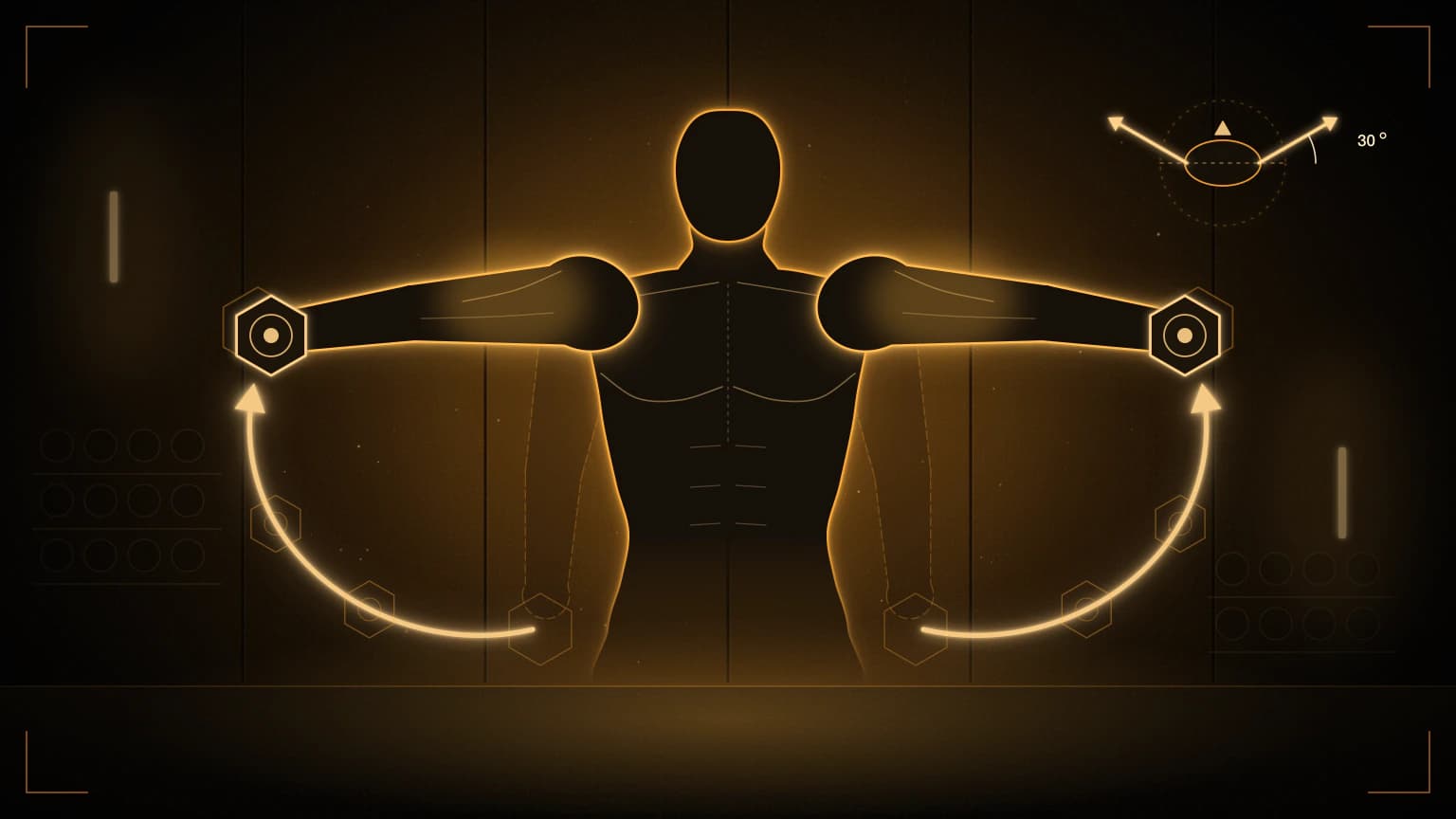
To do a dumbbell lateral raise, stand tall with a light dumbbell in each hand, soften your elbows, and raise your arms slightly forward of your sides until your hands reach about shoulder height. Keep your torso still, keep your shoulders away from your ears, and lower the dumbbells under control.
That path targets the lateral deltoid while giving you a repeatable rep you can load over time. A study that compared common shoulder exercises found that the lateral raise produced much more medial deltoid activity than the bench press or dumbbell fly, which supports its place in a focused shoulder workout.
Set up before the first rep
Use a load you can move without leaning, bouncing, or shortening the range. Stand with your feet around hip width and hold the dumbbells beside your thighs. Turn your palms toward your body or slightly toward the floor. Keep a small bend in each elbow and preserve that bend through the set.
Move your arms a little forward of a straight side raise. Coaches often call this the scapular plane because your arms follow the natural forward angle of your shoulder blades. You do not need to measure an angle. If someone watches you from above, your hands should travel slightly in front of the line across your shoulders.
Brace your trunk before you lift. Keep your ribs over your pelvis and let your knees stay soft. You want the shoulder joint to create the movement while your torso gives it a stable base.
Use this setup checklist:
- Pick dumbbells that let you pause at the top without changing posture.
- Stand tall and keep your ribs stacked over your pelvis.
- Soften your elbows and keep the same elbow angle.
- Point your arms slightly forward of your sides.
- Look straight ahead and keep your neck relaxed.
Raise the dumbbells with clean form
Start each rep by moving your elbows out and slightly forward. Let your hands follow the elbows instead of leading them. Raise until your upper arms reach roughly shoulder height, pause without shrugging, then lower along the same path.
Think about making the rep wide rather than high. If you chase extra height after your upper arms reach shoulder level, you often add a shrug and shift more work toward your upper trapezius. A higher finish can suit some lifters, but you should earn it with comfort and control rather than force it into every set.
Use a smooth tempo. Raise without a bounce, show a clear change of direction near the top, and resist the dumbbells on the way down. Research on repetition duration found similar hypertrophy across a wide span of normal lifting tempos. That finding gives you room to choose a controlled pace you can repeat instead of chasing one supposedly perfect count.
| Part of the rep | What you do | What you watch for |
|---|---|---|
| Start | Brace and let the dumbbells hang beside your thighs | Your ribs stay down and your knees stay still |
| Raise | Lead with your elbows along a slightly forward path | Your torso does not lean back |
| Top | Stop around shoulder height | Your shoulders stay away from your ears |
| Lower | Follow the same arc under control | The weights do not drop or collide with your thighs |
| Reset | Let the rep finish before the next raise | You do not bounce into the next repetition |
Choose a load that keeps tension on the side delt
The right dumbbell lets you finish the intended range with the same posture you used on the first rep. If you must kick the weights away from your thighs, lean backward, or bend your elbows more as the set continues, lower the load.
You can train the lateral deltoid across a broad range of loads. A network meta-analysis grouped resistance training into high, moderate, and low load conditions and found that each category can support hypertrophy when the sets reach a demanding effort. Heavy work produces a clearer advantage for maximal strength, but the lateral raise usually works better as a controlled muscle-building exercise than as a test of the heaviest dumbbell you can move once.
Start with 2 or 3 working sets of 8 to 15 clean repetitions. Keep 1 to 3 good repetitions in reserve while you learn the movement. When you reach the top of your chosen rep range on every set with the same range and posture, add the smallest available load and build the repetitions again.
Treat those numbers as a starting structure. Your weekly shoulder work also includes presses and other raises. A meta-analysis of weekly resistance-training volume found a graded relationship between weekly sets and muscle growth, while its categories did not establish one universal prescription for every person. Count all direct side-delt work in your program, add volume gradually, and reduce it when your performance or joints tell you that you have exceeded what you recover from.
The workout split generator can place shoulder work inside the week you can actually complete. Use it to see where your direct raises sit beside pressing sessions, then adjust the final program with your coach.
Fix the mistakes that steal side-delt tension
You shrug the dumbbells up
Your shoulders rise toward your ears before your arms reach the top. Reduce the load, stop the rep near shoulder height, and think about reaching the dumbbells toward opposite walls. Keep your neck long without forcing your shoulder blades down hard.
You swing through the bottom
You bend your knees, rock your torso, and launch the weights from your thighs. End each rep fully, regain your stacked posture, and start the next rep from stillness. A lighter dumbbell often fixes this immediately.
You lead with your hands
Your hands climb above your elbows and your wrists bend as if you were pouring a jug. Keep your wrists neutral and let your elbows guide the arc. Your hands and elbows can finish at roughly the same height.
You shorten every rep
Partial reps can serve a planned training purpose, but accidental half reps usually mean the load outran your current control. Lower the dumbbells and restore a consistent bottom and top position. Progress the weight after you can repeat that range.
You chase pain through the range
Muscular effort around the side delt differs from sharp, pinching, or persistent joint pain. Stop the set when the movement hurts. Change the range or variation with a qualified clinician or coach instead of forcing the same path.
Read the mind-muscle connection guide if you struggle to distinguish focused effort from extra movement elsewhere. Use attention to improve a visible rep, then confirm the result with your posture and range.
Use a variation that matches the problem
Cable lateral raise
Set a low cable beside you and hold the handle with the far hand, or use the near hand when your station fits that setup. The cable keeps pulling through the bottom, where a dumbbell creates less rotational demand at the shoulder. Keep the same slightly forward path and stable torso.
A 2025 within-participant study assigned each arm of trained lifters to dumbbell or cable lateral raises. Both versions increased lateral deltoid muscle thickness, and the researchers found no meaningful difference between them. Choose the version that lets you train consistently and control the full rep.
Seated lateral raise
Sit upright on a bench with the dumbbells beside you. The bench removes much of the knee and hip drive you might use while standing. This variation exposes a load that you can only move by swinging. Keep your feet planted and avoid rocking against the backrest.
Lean-away cable raise
Hold a stable upright with one hand, place your feet near it, and lean your body away while you raise the outside arm. The lean changes where the cable challenges you and gives the arm room to travel. Start light because the variation can feel harder than your standing cable raise.
One-arm raise
Train one side while your free hand holds a rack. The support can help you keep your torso quiet and lets you compare both arms. Match the range and repetition quality rather than forcing both sides to use a load that only your stronger side controls.
Film a useful form check
Place your phone about waist height at a front-oblique angle. Keep your head, hips, hands, and both dumbbells in frame. Film one complete working set instead of a staged single rep.
Review these checkpoints:
- Do your elbows travel slightly forward of your torso?
- Does your torso remain in the same position from start to finish?
- Do your shoulders rise toward your ears near the top?
- Do both arms reach a similar height without one wrist bending?
- Can you see a controlled change of direction before the dumbbells descend?
Get quick answers
How high should you raise the dumbbells?
Stop when your upper arms reach about shoulder height. You can use a slightly lower finish if that gives you a comfortable, controlled range. Extra height should not require a shrug or a change in posture.
Should your arms stay directly at your sides?
Move them slightly forward of your sides in the scapular plane. This path usually feels more natural than drawing a perfectly straight line across your body.
Should you use heavy dumbbells for lateral raises?
Use the heaviest load that preserves your range, posture, and smooth descent. If you swing or shrug to finish, the load has exceeded the technique you intend to train.
Are cable lateral raises better than dumbbells?
Both can build the lateral deltoid. The 2025 study below found similar muscle-thickness gains from cable and dumbbell versions when researchers matched the trained range. Pick the setup you can perform and progress consistently.
Where should lateral raises go in your workout?
Place them after your main press when pressing strength matters most, or earlier when side-delt work holds the highest priority. Keep enough control to avoid turning every rep into a full-body swing. The progressive overload guide shows how to progress repetitions, load, and range without changing everything at once.
Check the sources
- Coratella and colleagues, Different Shoulder Exercises Affect the Activation of Deltoid Portions in Resistance-Trained Individuals, PubMed
- Larsen and colleagues, Dumbbell versus cable lateral raises for lateral deltoid hypertrophy, PubMed
- Schoenfeld, Ogborn and Krieger, weekly resistance-training volume and muscle mass, PubMed
- Lopez and colleagues, resistance-training load effects on hypertrophy and strength, PubMed
- Schoenfeld, Ogborn and Krieger, repetition duration and muscle hypertrophy, PubMed
- Bodybuilding AI: Coach on Google Play