
exercise-execution
Push Pull Legs: How to Choose a 3-Day or 6-Day Routine
Compare three-day, six-day and rolling push pull legs schedules, assign exercises and plan around the sessions you can actually complete.
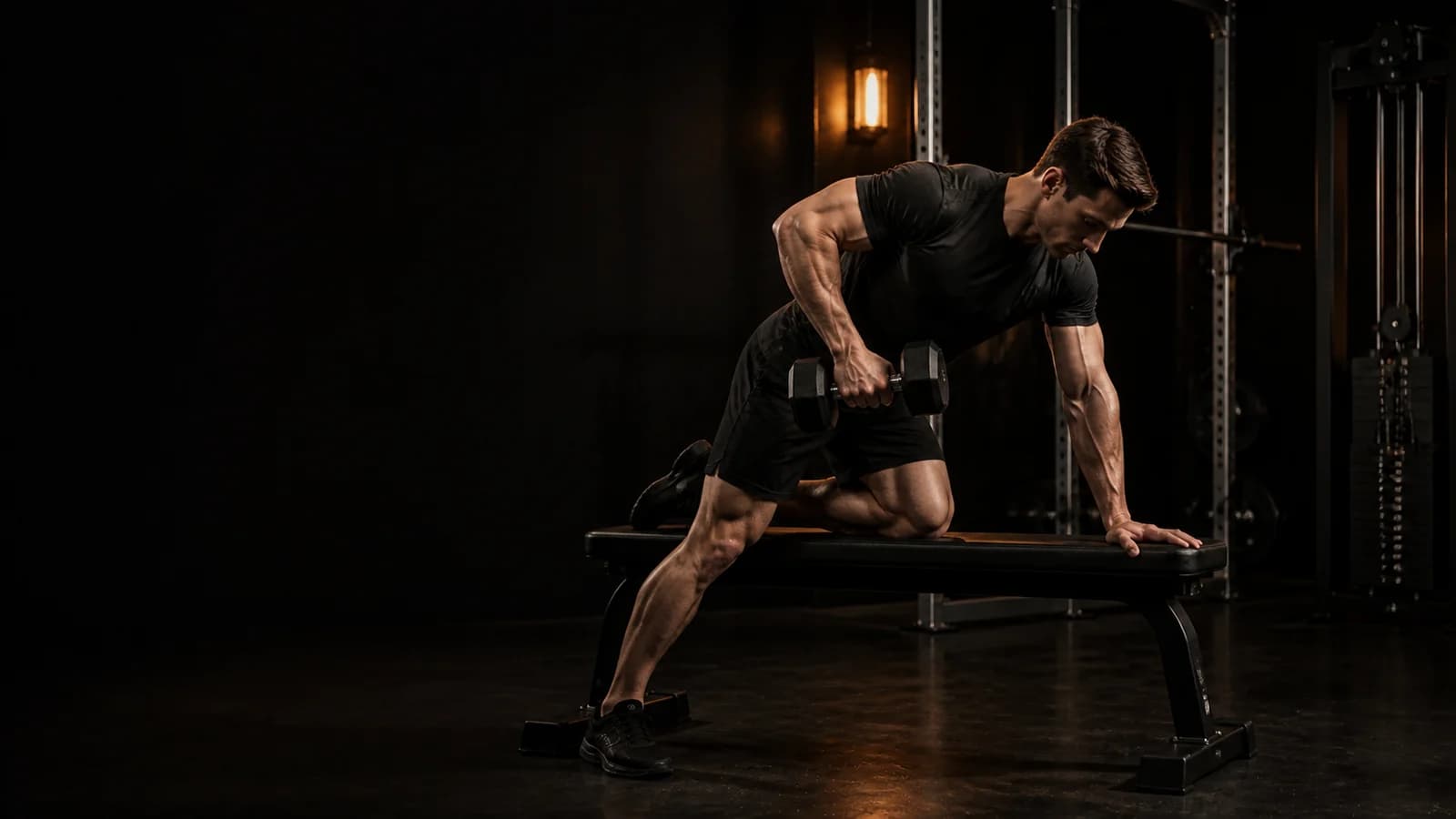
Push pull legs, or PPL, divides training into upper-body pushing, upper-body pulling and lower-body sessions. A three-day version completes each session once in a week. A six-day version repeats the sequence twice, usually leaving one day without lifting. Neither schedule is automatically best for everyone.
Choose the version you can realistically attend and recover from, then plan the actual exercises and workload. A six-day calendar is not permission to double every set in a three-day program.
What Belongs on Each Day?
| Session | Main training emphasis | Examples of movement choices |
|---|---|---|
| Push | Chest, shoulders and triceps | Chest press, overhead press, triceps work |
| Pull | Back and elbow flexors | Row, pulldown or assisted pull-up, curl |
| Legs | Lower body | Squat pattern, hip hinge, knee-flexion or calf work |
These groups overlap. You stabilize your trunk in many lifts, and a compound movement does not isolate a single muscle. Treat the labels as a way to organize training, not as anatomical walls between days.
In ACE's guide to split routines, coaches organize sessions by muscle group or movement function and adapt examples to the individual. Use the calendars below to plan your availability, not as a complete individualized workout prescription.
A Three-Day PPL Calendar
| Day | Planned session |
|---|---|
| Monday | Push |
| Tuesday | No lifting session |
| Wednesday | Pull |
| Thursday | No lifting session |
| Friday | Legs |
| Saturday | No lifting session |
| Sunday | No lifting session |
This example leaves space between lifting sessions. It may fit someone who has three reliable gym visits and other commitments. Each named session appears once in the week.
It does not mean a three-day PPL is necessarily the best way to use three visits. A full-body or another split may suit your goals better. Compare the actual program, your experience and your preferences with a qualified coach instead of choosing purely because a popular routine uses the PPL label.
A Six-Day PPL Calendar
| Day | Planned session |
|---|---|
| Monday | Push A |
| Tuesday | Pull A |
| Wednesday | Legs A |
| Thursday | Push B |
| Friday | Pull B |
| Saturday | Legs B |
| Sunday | No lifting session |
This example contains six consecutive lifting days. That is a substantial scheduling commitment. Alternating session labels does not guarantee that you have recovered from the previous day's work.
The A and B labels let you distinguish two sessions in the same category. They do not require six completely different workouts. You might use different exercise choices or distribute the planned work across the two visits, depending on the program.
Before choosing this calendar, account for other sports, physical work, sleep opportunities and the time needed to travel and train. If you repeatedly cannot attend, redesign the schedule rather than squeezing missed work into an already full day.
Three Days vs Six Days
| Question | Three-day version | Six-day version |
|---|---|---|
| How many visits does the example require? | Three | Six |
| How often does each named session appear? | Once per week | Twice per week |
| How much calendar flexibility remains? | More days without lifting | One day without lifting in this example |
| What needs special attention? | Whether the whole program fits your goal | Total work across both sessions and the attendance burden |
| Does the label guarantee progress? | No | No |
Count the work you actually perform, not just the number of training days. Two programs can use the same calendar and differ greatly in exercise selection, effort and total workload.
Use a Rolling Sequence When Your Week Changes
You can follow push, pull, legs in order without resetting the sequence every Monday. Write the next session after the last one you completed.
Suppose you complete push on Tuesday and pull on Friday. If your next suitable visit is Sunday, legs comes next. If you miss that Sunday visit, legs is still next when you return. You do not skip it because the calendar reached Monday.
Similarly, if push was planned but never completed, your next session remains push. “Next after the last completed session” is the rule, not “next after the last date on the calendar.”
A rolling sequence changes how often each category appears in a calendar week. Record actual dates so you can see the spacing instead of assuming that every week contains the same number of sessions.
Choose Exercises Without Building an Endless Menu
The table at the top lists options, not a command to perform every exercise. Ask what role each movement serves in your program.
On a push day, two exercises may provide similar pressing work. On a pull day, several rowing variations may overlap. On a legs day, both a squat and a hinge can involve the lower body, but they are not interchangeable. More names on the page do not automatically make a better session.
Deadlifts illustrate why the label alone is insufficient. Some programs place them on pull day and others on legs day. Either way, account for their demands when planning adjacent sessions. Do not include a heavy hinge on both days simply because it can fit both categories.
Choose sets, repetitions, load and effort with the rest of your program in view. This guide explains scheduling; it does not prescribe a universal workload.
Two Fictional Scheduling Decisions
A Reader With Three Reliable Visits
In this fictional example, Alex can attend on Monday, Wednesday and Friday. Alex compares a three-day PPL with a full-body option and asks a coach which structure fits the current goal.
Alex does not choose six days on paper while knowing three visits will be missed. The decision begins with real availability. No muscle-gain result is implied by the example.
A Reader With Irregular Shifts
In another fictional example, Sam has changing workdays. Sam chooses a rolling sequence and records “pull completed; legs next” after the latest session.
When a shift changes, Sam moves the next visit rather than doing two sessions as compensation. The record makes the next decision clear without pretending that the week followed a fixed template.
Review What You Actually Did
After you choose a schedule, use Bodybuilding AI: Coach to keep your lifting sessions organized and review recorded exercise technique. Log the exercises, sets and repetitions you actually completed, and attach a clip when you have a specific visible technique question.
For a rolling PPL, note the last completed session and the next planned category. Compare the record with your coach before adding work. An app log cannot determine recovery from a label or diagnose why a movement hurts.
When to Reconsider the Plan
Repeated missed visits, sessions that no longer fit the available time, or difficulty completing the agreed work are reasons to review the plan. They do not automatically identify one physiological cause.
Do not use soreness as a progress score or a fixed number of rest hours as clearance to train through symptoms. Stop an exercise that causes pain and seek appropriate qualified guidance. If you need a break or a simpler schedule, changing the plan is a practical decision, not a failure of discipline.
Copyable PPL Planning Sheet
- My goal and current program:
- Gym visits I can realistically attend:
- Fixed calendar or rolling sequence:
- Exercises assigned to each category:
- Overlap I need to discuss with my coach:
- Last session I actually completed:
- Next planned session:
- Reason to pause or revise the plan:
Start with the attendance line. Then choose a calendar that fits it and check the actual workload with your coach. You can make a PPL plan clear without making it complicated.